Pool Leak Detection in Vineland, NJ
Losing water faster than normal evaporation? We utilize precise testing to locate structural and plumbing leaks in your swimming pool.
Talk With a Leak SpecialistDiagnosing Pool Water Loss
An inground pool leak Vineland homeowners face is frustrating, especially during the short New Jersey swimming season. While some water loss is normal due to evaporation (especially during hot summer days in East Vineland or South Vineland), dropping an inch or more per week often signals a leak.
Whether you've noticed issues during a spring opening or suspect winterization damage, our pool leak detection Vineland NJ service focuses on thoroughly evaluating the pool's interior shell and the underground pool plumbing system. We test skimmer areas, return lines, suction lines, light niches, and plumbing connections to locate the exact source of water loss.
Is It Evaporation or a Leak?
You can perform a simple bucket test: place a bucket filled with water on the pool step so the water level inside the bucket matches the pool level. Mark both levels. After 24 hours, if the pool water has dropped significantly more than the bucket water, you likely have a leak.
How We Find Pool Leaks
Dye Testing
We use specialized dye near suspected leak points (like light niches or skimmer joints) to see exactly where water is being pulled out of the pool.
Pressure Testing
We isolate and pressurize the underground pool plumbing lines to identify if the leak is occurring in a suction or return pipe.
Acoustic Detection
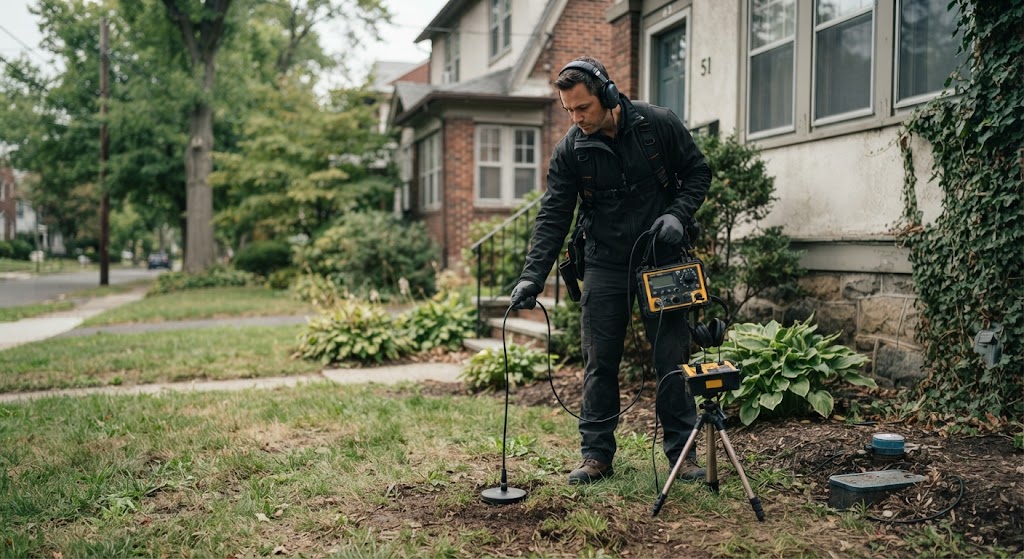
For a pool plumbing leak Vineland NJ pools might develop underground, we use listening equipment to pinpoint the exact location of the escaping water.
Repair and Next Steps
Once we identify the issue, we'll explain the necessary swimming pool leak repair Vineland options. Minor structural leaks around fittings can often be sealed with underwater epoxies or putty. If an underground plumbing line is broken, we will mark the exact location to minimize digging and repair costs.
Ignoring a pool leak can lead to chemical imbalances, increased water bills, and severe soil erosion around the pool shell, potentially causing structural failure over time.
Call NJ Leak DetectionFrequently Asked Questions
How much water loss is normal for a pool?
Depending on temperature and humidity, a pool can naturally lose about 1/4 to 1/2 inch of water per day to evaporation. More than this indicates a potential leak.
Should the pump be on or off when testing?
If the pool loses more water when the pump is running, the leak is likely in the return plumbing. If it loses more when the pump is off, the leak is likely in the suction plumbing or the pool shell.
Can a leak happen during the winter?
Yes. Improper winterization can lead to water freezing and expanding inside plumbing lines or skimmers, causing cracks that only become apparent when you open the pool in the spring.
Related Services
Explore other specialized leak detection services we offer:
Water Line Leak Detection | Irrigation & Sprinkler Leak Detection